Sport Climbing in Montenegro: Crags, Grades & Seasons
Bolted limestone, short approaches and a season that runs from late winter to early winter.
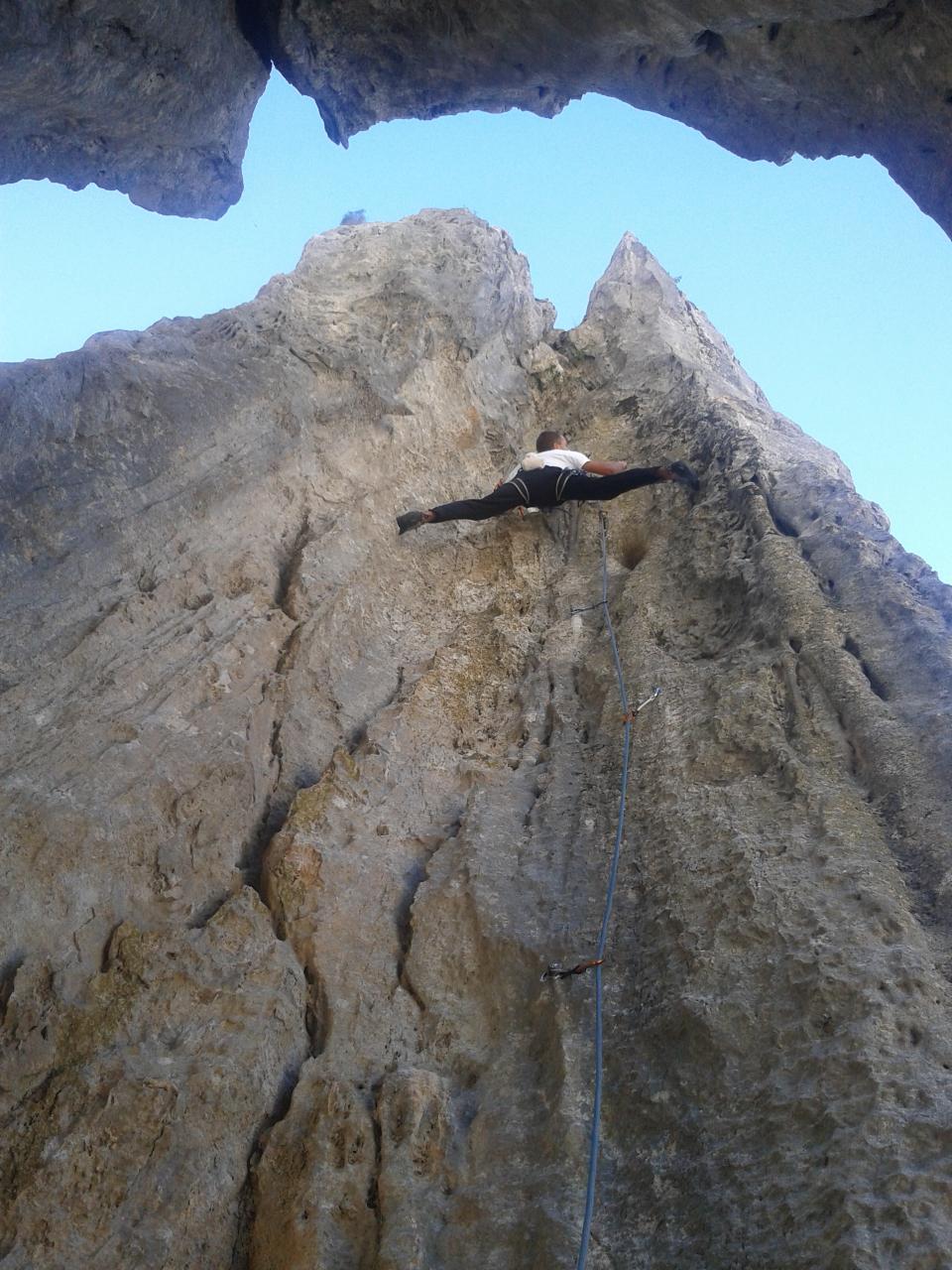
Sport climbing is how most people meet Montenegrin rock. The protection is already in the wall — a line of expansion bolts you clip as you go — so the day is about movement and confidence rather than hauling a rack of gear. With more than 200 bolted routes spread across the country and crags you can often reach in a few minutes from the car, it's the most forgiving and most social way into the sport here.
What sport climbing is — and why it suits beginners
On a sport route the climber ties into one end of the rope, a partner belays from the ground, and the climber clips quickdraws into pre-placed bolts on the way up. Reach the top, lower off, swap over. Because the protection is fixed and frequent, the consequences of a fall are small and controlled. That's exactly why it works for first-timers: you learn to trust the rope on day one. If you have never touched rock, our do I need experience FAQ walks through what a first session actually looks like.
The bolted crags, region by region
Four areas carry the country's single-pitch climbing, each with a different character.
Podgorica
The capital sits at the heart of the scene. The crags along the Cijevna gorge and at Smokovac — the largest natural climbing area in Montenegro, just up the road towards Kolašin — hold the densest concentration of routes and the steepest, tufa-laden walls, with lines reaching up to around 35 metres. This is where the hardest established grades live, but there is plenty of moderate climbing too. Build a day here from one of our Podgorica adventure tours.
Plužine
Above Piva Lake, a couple of kilometres from the town of Plužine, a tall crag offers dozens of routes spanning a wide spread of grades, set against the dramatic backdrop of the Piva canyon. It pairs naturally with the area's via ferrata and multi-pitch. See our Plužine adventure tours for the wider menu.
Kolašin
In the green middle of the country, the crags strung along the Podgorica–Kolašin road sit at slightly higher altitude, which keeps them pleasant when the coast is baking. A good choice for mid-summer single-pitch days.
Bar
On the coast near Bar, sunny low-altitude limestone comes into condition early in the year and stays climbable late. South-facing aspects and Mediterranean air make this the place to be when the mountains are still cold.
The same line of bolts can be a triumph for a first-timer and a warm-up for a regular — that's the quiet genius of a well-equipped sport crag.
The grade range
Montenegro grades in UIAA Roman numerals, the standard across the Balkans. Sport routes run the full span from around UIAA IV — friendly, big-holds territory — up past X+ on the hardest Podgorica testpieces. For a working beginner, expect to enjoy clean IV and V routes on day one; intermediates spend most of their time in the VI–VII band where the bulk of the classics sit. If grade systems confuse you, our climbing grades FAQ lays out the UIAA scale and how it maps onto French and American grades.
A typical first day on the rock
If you've never sport climbed, here's roughly how a guided day unfolds. We meet, fit you with shoes, harness and helmet, and start at the base of an easy route while your guide teaches you to tie in and how the belay works. Your first climbs are deliberately gentle — big holds, low angle — so you learn to trust the rope and your feet before the grade nudges up. Most people are genuinely climbing within the first half-hour, and by the afternoon they're surprised at what they can get up. The clip-and-lower simplicity of sport climbing is what makes that fast progress possible, and it's why we recommend it as the first discipline to try before exploring bouldering or the bigger multi-pitch walls.
Best months
Sport crags here have one of Europe's longer seasons. The climbing begins as early as February and March on the warm coastal and Podgorica rock and runs through to November or December on south-facing aspects. The sweet spots are spring (March–May) and autumn (September–November), when friction is best and temperatures are kind. In high summer, shift to the higher Kolašin crags or climb early and late in the day. We go deeper in our season guide.
Key facts
- Location
- Podgorica, Plužine, Kolašin and Bar
- Difficulty
- UIAA IV–X+; beginner to expert
- Season
- Spring & autumn best; coast climbable Feb–Dec
- Duration
- Half-day to full day
- Price
- from around €250 (group of 5)
Climbing the crags with a guide
Because the crags are scattered and many approaches are unmarked, a guide saves you a frustrating day of wrong turns. Our certified guides bring all the technical safety equipment — ropes, quickdraws, harnesses, helmets and shoes — choose a venue matched to your level and the day's conditions, and teach you to belay and clip safely as you go. A guided sport climbing day starts from around €250 for a group of five. To see how sport climbing fits alongside the country's other disciplines, start with our complete climbing guide, or message us on WhatsApp at +382 69 69 26 69 to plan your dates.