Canyoning for Beginners: What to Expect on Your First Descent
No experience, a bit of nerves, and a wetsuit you have never worn — here is honestly how the day unfolds.
Almost everyone who books their first canyon arrives with the same quiet question: "Am I actually going to be able to do this?" The honest answer, after thousands of first-timers, is yes — far more easily than you fear. Canyoning is one of the few real adventure sports you can try with zero experience and finish grinning. This guide walks you through exactly what your first descent involves, so you arrive knowing what to expect instead of guessing.
What a first trip actually looks like
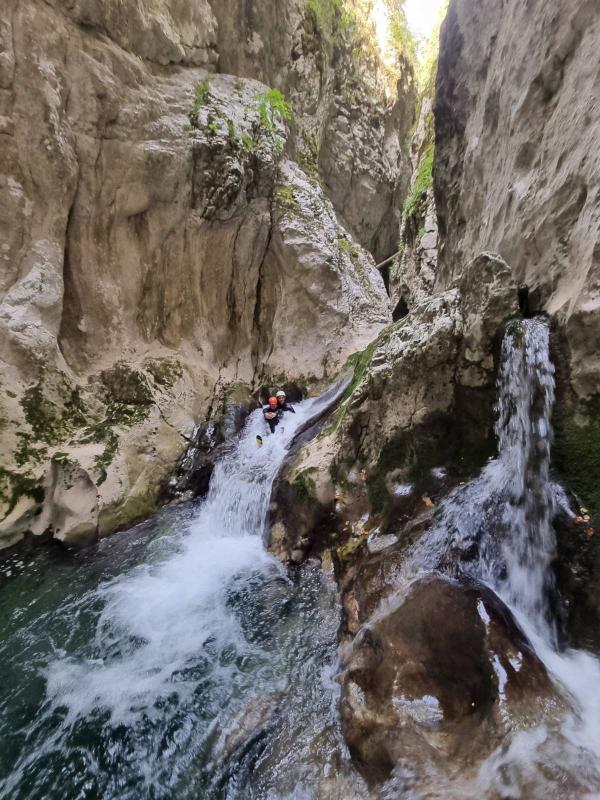
You meet your guides, get fitted with kit, and walk a short way to the top of the canyon. There, at the water's edge, you are taught everything you need — how to abseil, how to sit into the harness, how to position yourself for a jump or a slide, and the hand signals the guides use. Then you start down, and the canyon teaches you the rest. Each feature is explained before you do it; nothing arrives as a surprise. A beginner descent runs around three hours of swimming, sliding, gentle jumps and short abseils, with breaks whenever the group needs them.
Do I need to be fit?
You need to be in ordinary, everyday good health — able to swim a little, walk on uneven ground, and keep moving for a few hours. You do not need to be an athlete, and you do not need any climbing or rope skills beforehand. If you can manage a brisk country walk and you are comfortable getting your face wet, you can canyon. Start on the right canyon and the physical demand stays well within reach.
Dealing with fear
A little fear is normal and, frankly, useful — it keeps you switched on. The two common worries are heights (the abseils) and committing to a jump. Here is the reassurance: on a beginner canyon almost every jump is optional. You can rope down instead, every time, with no judgement. The abseils are fully controlled by the system and your guide; you are never holding your own life in your hands by strength. Most people find the first abseil is the scariest thing they do all day, and the second one is fun.
The jump is always a choice. The fun is not — that part is guaranteed.
What to wear and what we provide
We supply all the technical gear: wetsuit, harness, helmet and descender, fitted before you start. What you bring is simple:
- Swimwear to wear under the wetsuit.
- Trainers or sport sandals with a heel strap that you do not mind getting soaked — never flip-flops.
- A towel and dry clothes for afterwards.
- Water and a snack, and sun protection for the approach.
For the full packing checklist, see what to bring.
The gear, and why it works
The wetsuit keeps you warm and adds buoyancy and padding — it is your best friend in cold water and on rock. The harness and descender turn a vertical waterfall into a controlled, almost gentle slide down a rope. The helmet protects your head from the one thing canyons are full of: rock. None of it requires you to be strong. It requires you to relax and trust it, which is exactly what your guide spends the first ten minutes helping you do.
The guides
This is the part that matters most. We are certified mountain guides and a trained rescue team, working these canyons since 2014. On a beginner trip the guiding is hands-on: someone rigs and checks every abseil, someone watches every jump, and someone is always close to a swimmer who needs a hand. You are never expected to figure anything out alone. If safety is weighing on your mind, read our straight answer in is canyoning safe?
The little things first-timers wish they'd known
A few practicalities make a surprising difference to a first descent:
- Eat beforehand. Canyoning burns more energy than people expect — cold water and constant movement add up. A proper breakfast and a snack in your pack go a long way.
- Trust the wetsuit before you trust your nerves. The first time you sit back into a harness over a drop, your instinct screams. The gear is rated for many times your weight; the discomfort is purely psychological, and it passes within one or two abseils.
- Breathe before a jump. The cautious moment at the top of a leap is normal. Look at where you're going, not down, take a breath, and step — or rope down instead, with zero shame.
- Leave the valuables behind. Phones, watches and loose jewellery don't belong in a canyon. Many of our trips capture the day on a guide's action camera, so you get the photos without risking your own kit.
What happens if something goes wrong
It is a fair question, and the honest answer is reassuring. We do not just guide these canyons — we are a trained rescue team, and we plan every descent with the unexpected in mind. Routes are chosen for your level, water levels are checked before we commit, and our guides carry the equipment and the training to manage a slip, a cramp or a wobble of nerve calmly and quickly. Incidents on a well-run beginner canyon are rare precisely because so much care goes into preventing them. The single biggest safety factor in canyoning is the quality and ratio of the guiding — which is exactly why "going with a cheap, unguided group" is the one shortcut we'd urge you never to take.
Which canyon to start with
Start warm, start friendly. We point almost every beginner to Drenoštica near Budva: sun-warmed water, gentle jumps you can skip, short abseils, and a relaxed three hours that ease you into the sport. It removes the cold — the single biggest hurdle for nervous first-timers — and lets you focus on enjoying the movement. Save the cold, narrow intensity of the mountain canyons for once you have caught the bug.
Key facts
- Experience needed
- None — all techniques taught on the day
- Fitness
- Able to swim a little and walk on uneven ground
- Best first canyon
- Drenoštica (Budva) — warm, friendly, optional jumps
- Duration
- ~3 hours in-canyon
- Price
- from around €100
Your first descent will almost certainly become a story you tell for years. When you are ready, book the beginner-friendly Drenoštica tour, browse our full canyoning programme, and message our guides — we will match the canyon to your nerve and your group, and look after the rest.