Adventure Tours in Skadar Lake
The largest lake in the Balkans — a national park of island monasteries, nesting pelicans and quiet water beneath Mount Rumija.
Skadar Lake is a different kind of Montenegro adventure — slower, wilder, greener. Straddling the border with Albania, it is the largest lake in the Balkan Peninsula, swelling from around 370 to over 500 square kilometres with the seasons. The Montenegrin shore is protected as a national park and counts among the great bird reserves of Europe, with some 270 species and one of the last colonies of nesting Dalmatian pelicans. For us this is the country's premier flat-water kayaking destination, where you paddle past lily-covered bays, hidden inlets and monasteries built on tiny islands.
The lake also sits at the foot of Mount Rumija, which links the basin to the Adriatic and opens up serious hiking. Nearby, the Međureč gorge on Rumija delivers intense summer canyoning, and the limestone above Podgorica offers some of the country's best sport climbing — making this a surprisingly versatile base.
The best adventures from Skadar Lake
Getting to Skadar Lake
The lake is easiest to reach from the capital. Podgorica airport (TGD) is around 30 minutes from the northern shore by car, and there are frequent, inexpensive trains and buses from Podgorica and Bar — the railway line skirts the eastern edge of the lake on one of the most scenic stretches of track in the country. From the coast, Kotor and Tivat are roughly 90 minutes to two hours away over the mountains. The main launch villages of Virpazar and Rijeka Crnojevića are small and walkable, and our guides arrange transfers from Podgorica or the coast to the put-in.
When to visit
Lake kayaking runs through the warm season, from roughly April to October. Late spring is glorious — the bays are carpeted with water lilies and the birdlife is at its busiest — while summer brings warm, settled water ideal for longer paddles and swimming stops. Autumn is quiet and golden. For the Međureč canyon on Rumija, high summer is the season: it is an intense gorge of pools and vertical drops, reached by a 4×4 transfer, and best tackled when the heat makes the cold water welcome. Rumija hiking is most comfortable in the shoulder months.
- Spring (Apr–Jun): lilies in bloom, peak birdlife, mild hiking.
- Summer (Jul–Aug): warm water for paddling — and Međureč canyoning.
- Autumn (Sep–Oct): calm, quiet lake and clear air on Rumija.
Part of Skadar's appeal is how much there is to see between the paddle strokes. The lake is dotted with island monasteries — Kom, built on a hilltop islet, is the best known of some twenty churches and fortresses scattered around the basin — and the surrounding hills hide old fishing villages and family wineries pressing the local Vranac grape. We build our days around this: a few hours of kayaking through the lily bays, a stop to watch herons and, in season, pelicans, and a long lunch in a village like Virpazar before the afternoon paddle. It is the rare Montenegro adventure where the culture and the wildlife are as much the point as the effort.
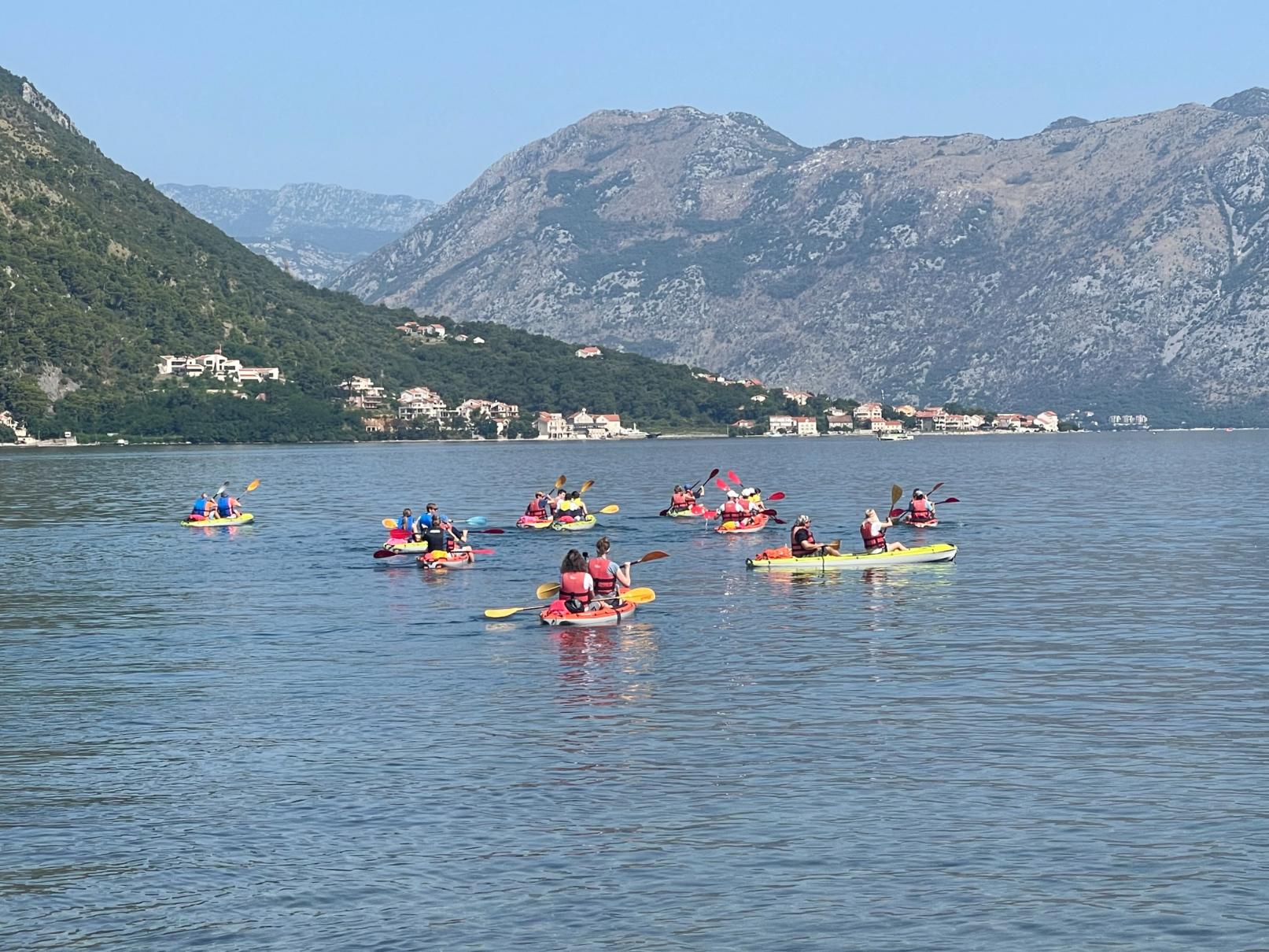
Most of Montenegro's adventure is vertical and loud — Skadar is the one place we ask you to slow down and float.
Where it fits in your trip
Skadar Lake is the perfect counterweight to a high-energy coast or mountain itinerary — a day or two of paddling, birdwatching and village wine before or after the big descents. It pairs naturally with the capital, so see our guide to adventure tours in Podgorica for the climbing and canyoning on the lake's doorstep. For inspiration on where else to walk in the country, our hiking in Montenegro guide covers the routes from the lakeshore to the high peaks.